
How ATrack Supports ABA Therapy Progress in Georgia

How ATrack Supports ABA Therapy Progress in Georgia
Families receiving ABA Therapy in Georgia often want to know how their child's progress is being measured and whether treatment is producing meaningful results.
At Applied Behavioral Connections, progress is monitored through individualized goals, ongoing data collection, and regular clinical review.
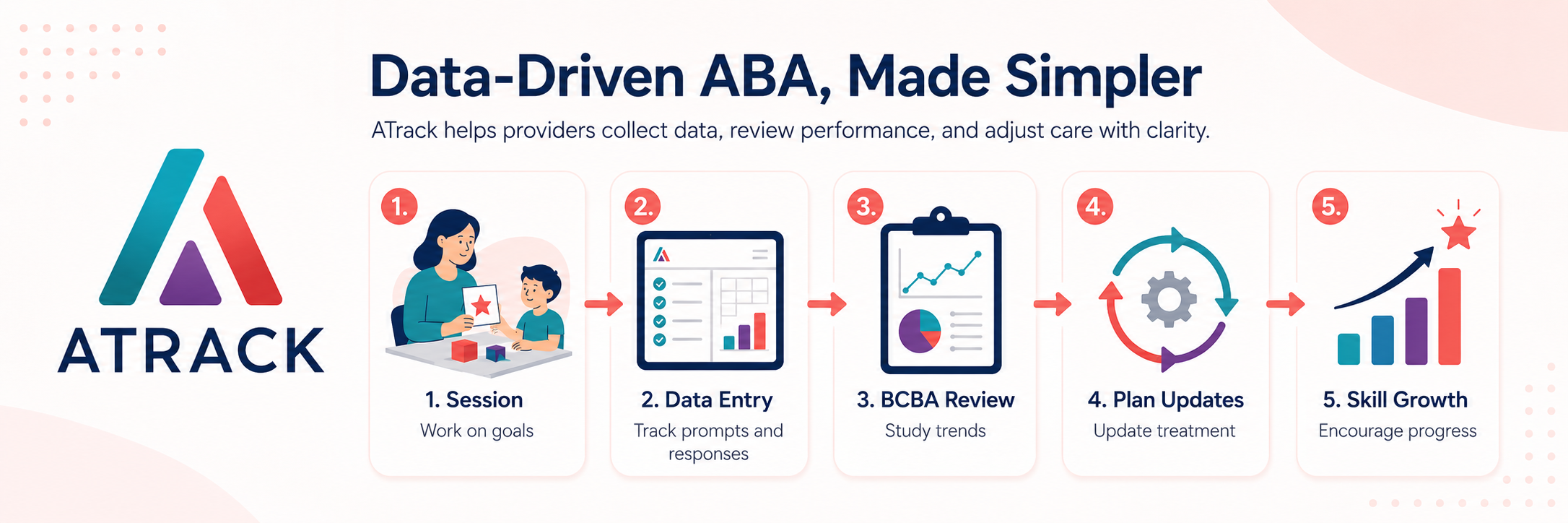
Our team uses ATrack, an ABA data collection and practice management platform, to help document sessions, organize treatment information, and track changes over time.
Measuring progress through individualized goals
Every child has different strengths, needs, and priorities.
A Board Certified Behavior Analyst® (BCBA®) develops an individualized treatment plan based on assessment findings, clinical observations, and input from the family.
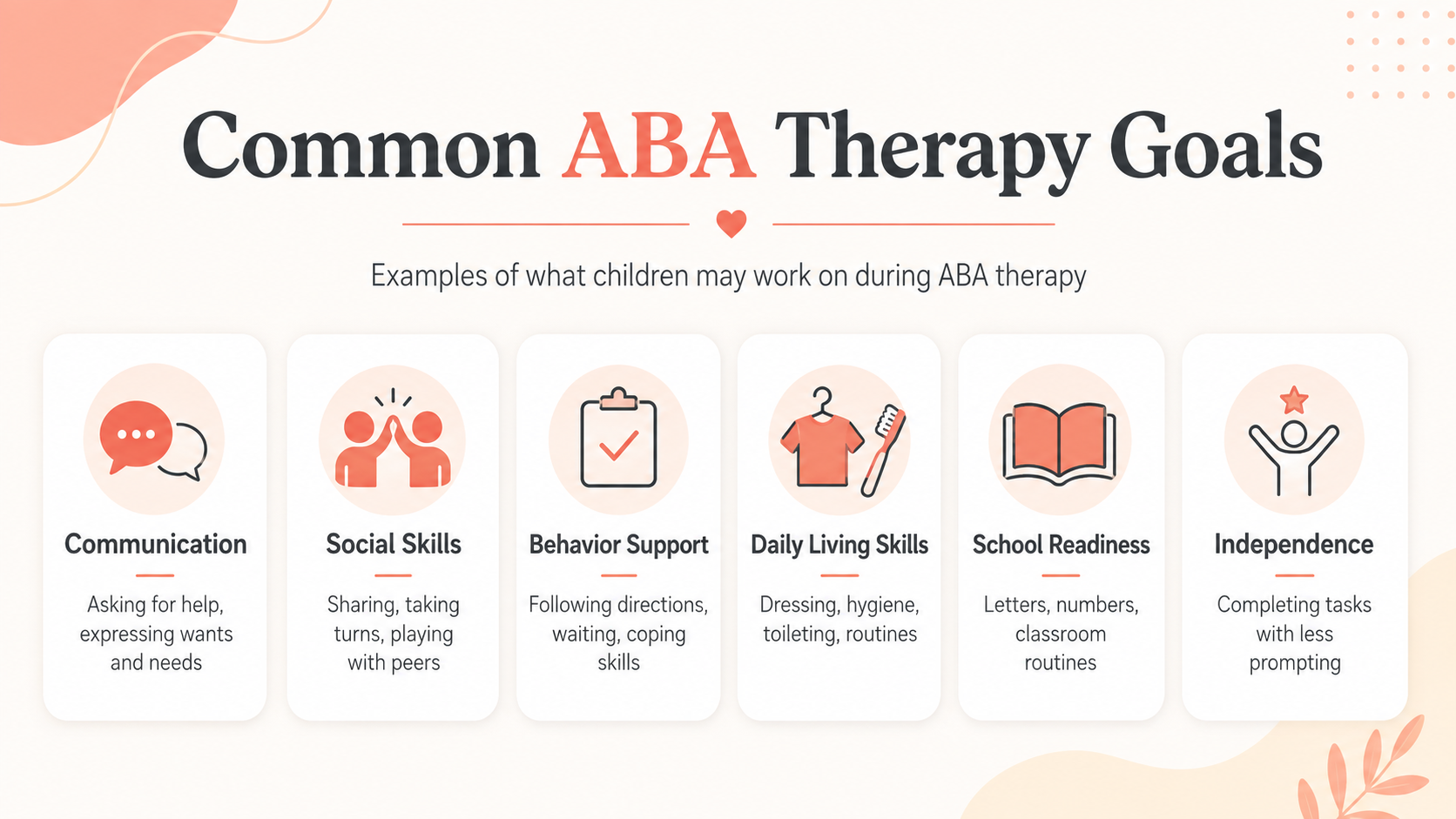
Goals may focus on areas such as:
Communication
Social skills
Daily living skills
Behavior support
School readiness
Independence
Following routines and directions
Because these goals are measurable, the clinical team can evaluate how skills develop throughout treatment.
How ATrack helps track ABA therapy
During therapy sessions, Registered Behavior Technicians® (RBTs®) and other clinicians collect data related to the child's specific goals.
Depending on the treatment plan, the team may monitor:
Independent responses
Levels of prompting or assistance
Frequency or duration of behaviors
Progress toward skill mastery
Changes in performance across sessions
Use of learned skills in different situations
ATrack helps keep this information organized in one centralized platform, allowing the supervising BCBA to review patterns rather than relying on individual observations alone.
For families receiving ABA Therapy in Georgia, this provides a clearer picture of how the child is responding to treatment over time.
Using data to improve treatment
ABA treatment plans are designed to evolve.
When data shows that a child is making consistent progress, the BCBA may advance a goal, reduce support, or introduce opportunities to use the skill in new environments.
If progress slows, the clinical team can review the data and determine whether the approach should be adjusted.
This could include modifying teaching strategies, changing prompting levels, creating additional practice opportunities, or breaking a complex skill into smaller steps.
ATrack helps clinicians identify these trends and make informed decisions based on the child's actual performance.
What can ABA therapy progress look like?
Progress does not look the same for every child.
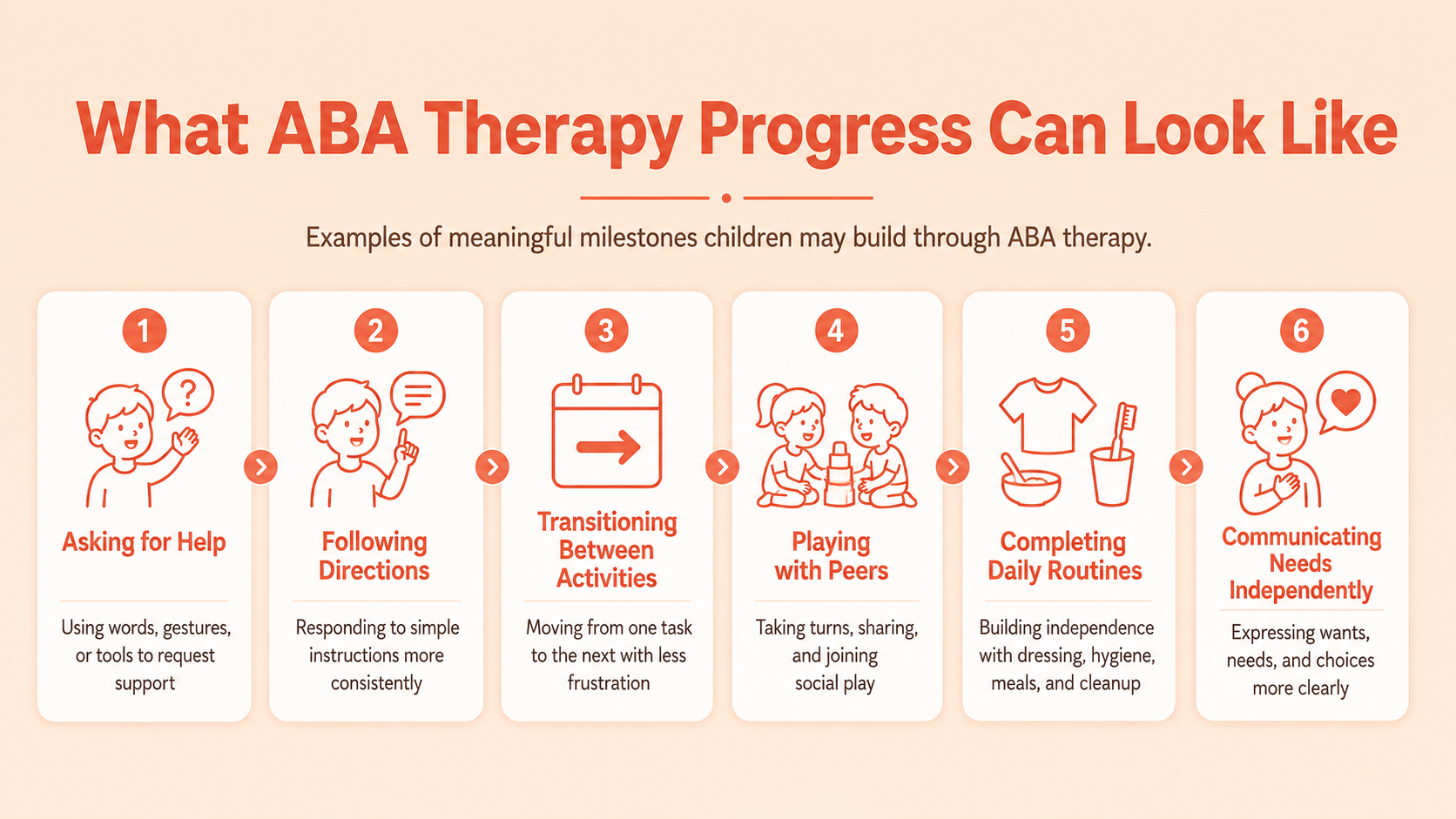
For one child, success may mean asking for help independently. For another, it may mean transitioning between activities with less support or participating more successfully in a classroom routine.
Progress may also include:
Communicating wants and needs
Following directions more consistently
Playing or interacting with peers
Waiting for preferred activities
Completing daily routines with less assistance
Participating in family activities
Using new skills outside of therapy
Small improvements can gradually support greater communication, independence, and participation in everyday life.
Seeing progress over time
A single session rarely tells the entire story.
ATrack allows the clinical team to review treatment data across multiple sessions and identify longer-term patterns.
This information can help the BCBA determine whether a skill is improving, whether additional support may be needed, or whether a goal has been mastered.
Progress is not always linear, so reviewing trends over time gives clinicians a more complete understanding of a child's development.
Families are an important part of the process
Parents and caregivers can provide valuable insight into how skills are being used outside of therapy.
Families may notice changes at home, school, or in the community that help the clinical team understand whether new abilities are carrying over into everyday settings.
Parents may want to ask:
What goals is my child currently working on?
How is progress being measured?
Which skills are improving?
What can we practice at home?
Are there areas that need additional support?
What goals may come next?
Ongoing communication between families and clinicians helps keep treatment focused on meaningful outcomes.
Data-informed ABA Therapy in Georgia
At Applied Behavioral Connections, we believe quality ABA Therapy in Georgia should be individualized, measurable, and responsive to each child's needs.
ATrack helps our clinical team organize treatment data, monitor progress toward individualized goals, and support informed clinical decision-making throughout care.
Technology does not replace clinical expertise. Instead, it gives BCBAs and RBTs organized information that can help them better understand what is working and where treatment may need to evolve.
Better data. Better insights. Better-informed care.
Looking for ABA Therapy in Georgia?
If your family is exploring ABA Therapy in Georgia, Applied Behavioral Connections can help you learn more about assessment, individualized treatment planning, and the process of getting started.